Selected work / Custom web application
JugaBiz
Business operations without the spreadsheet sprawl.
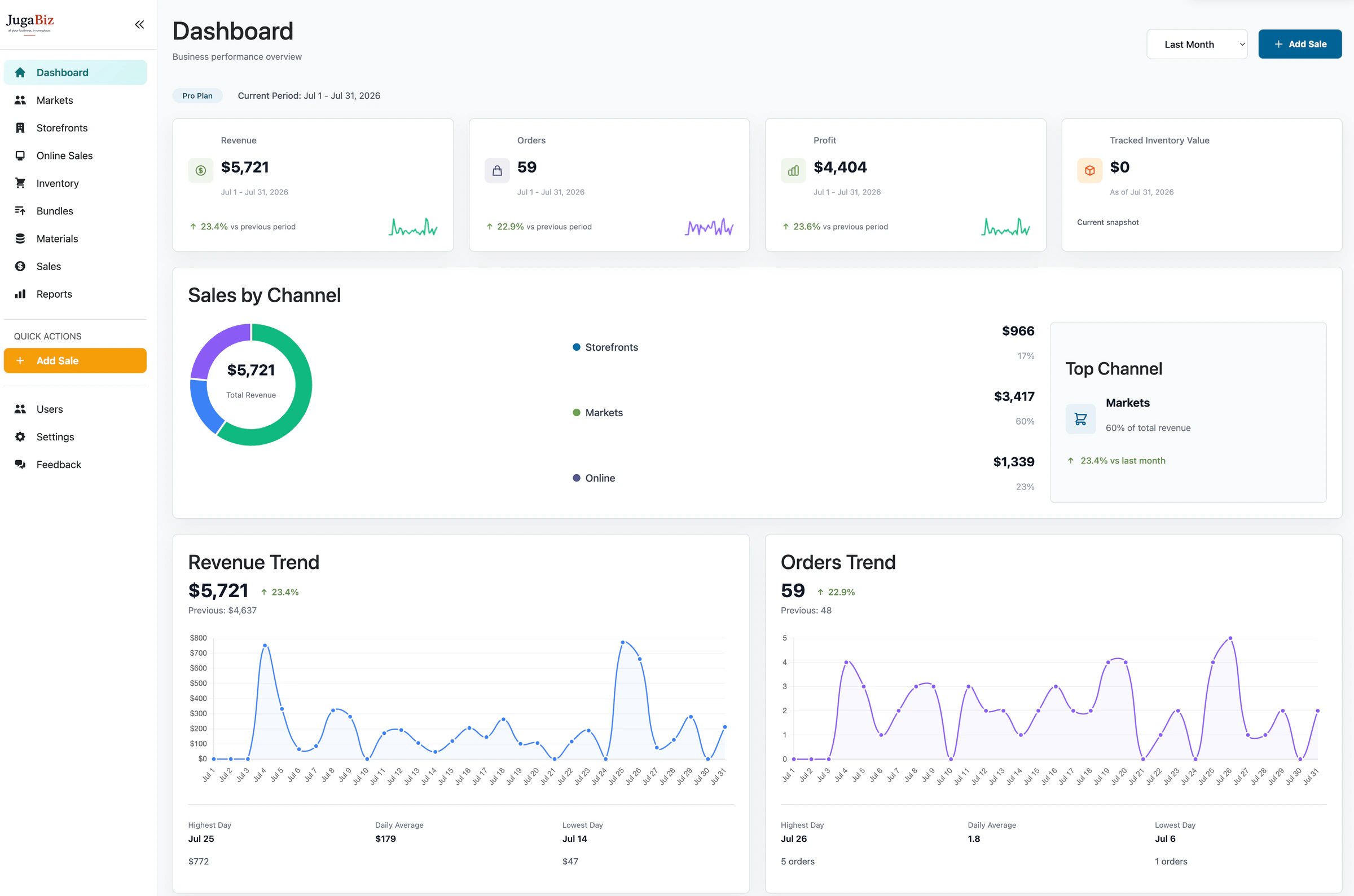
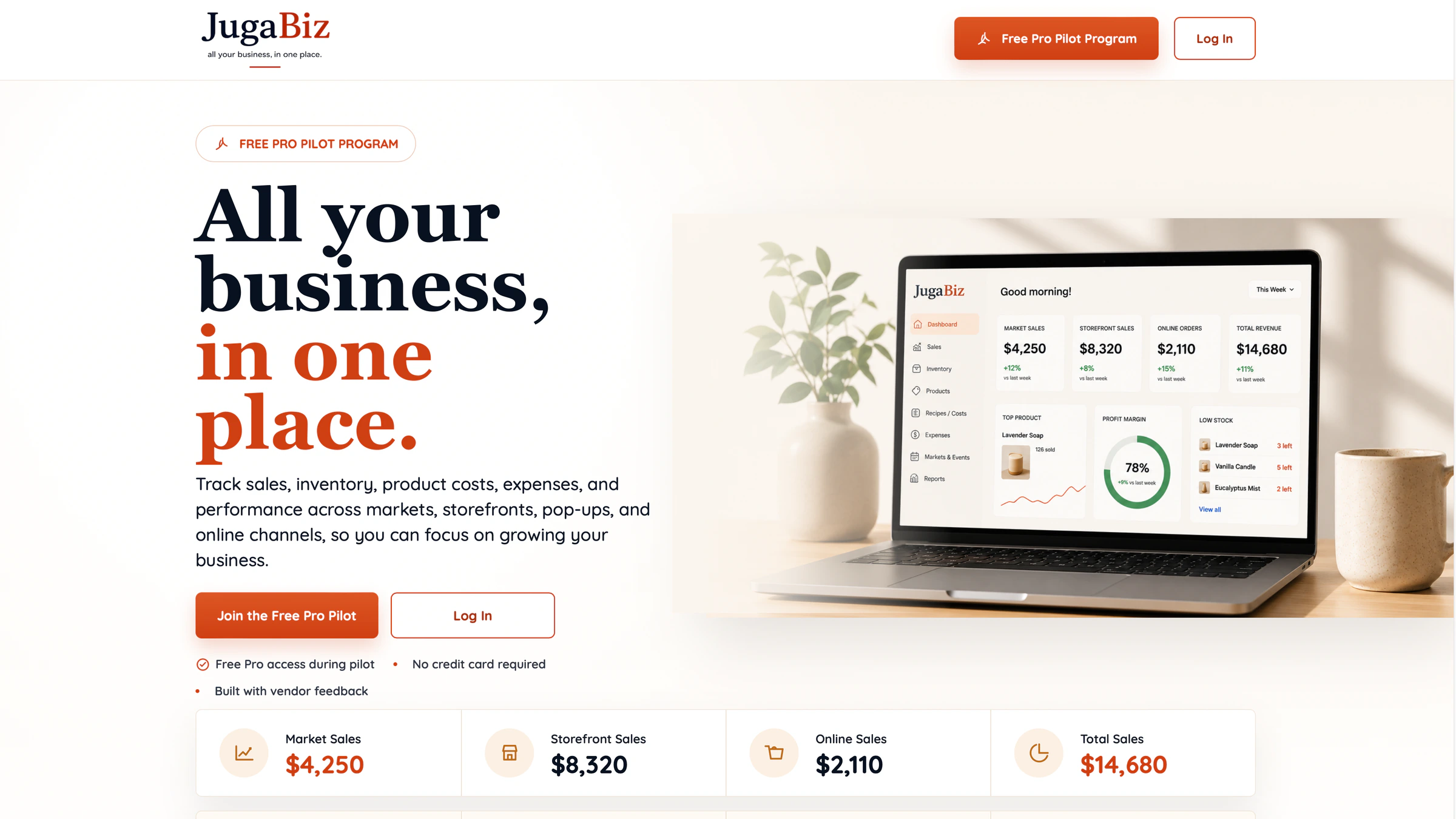
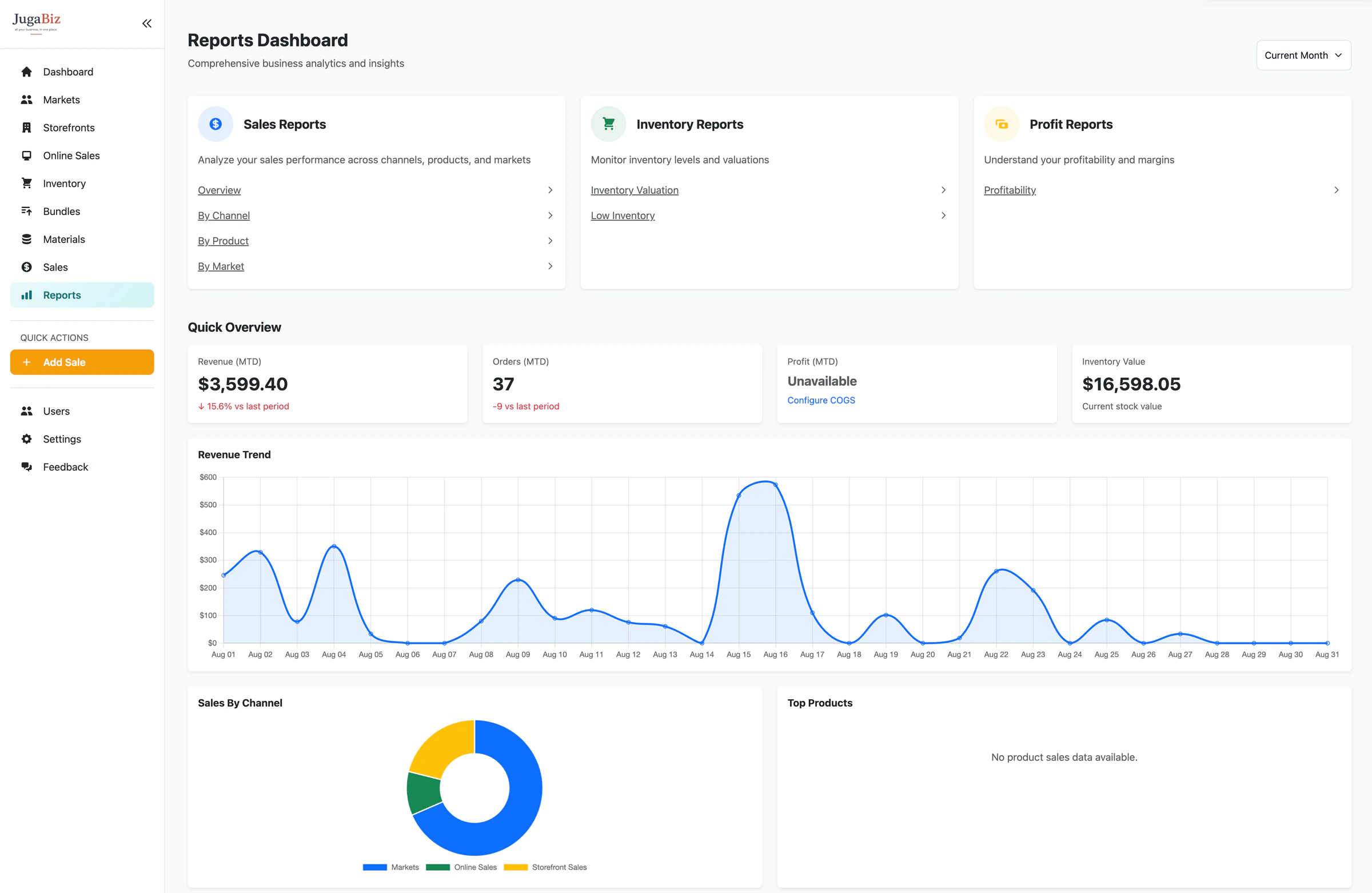
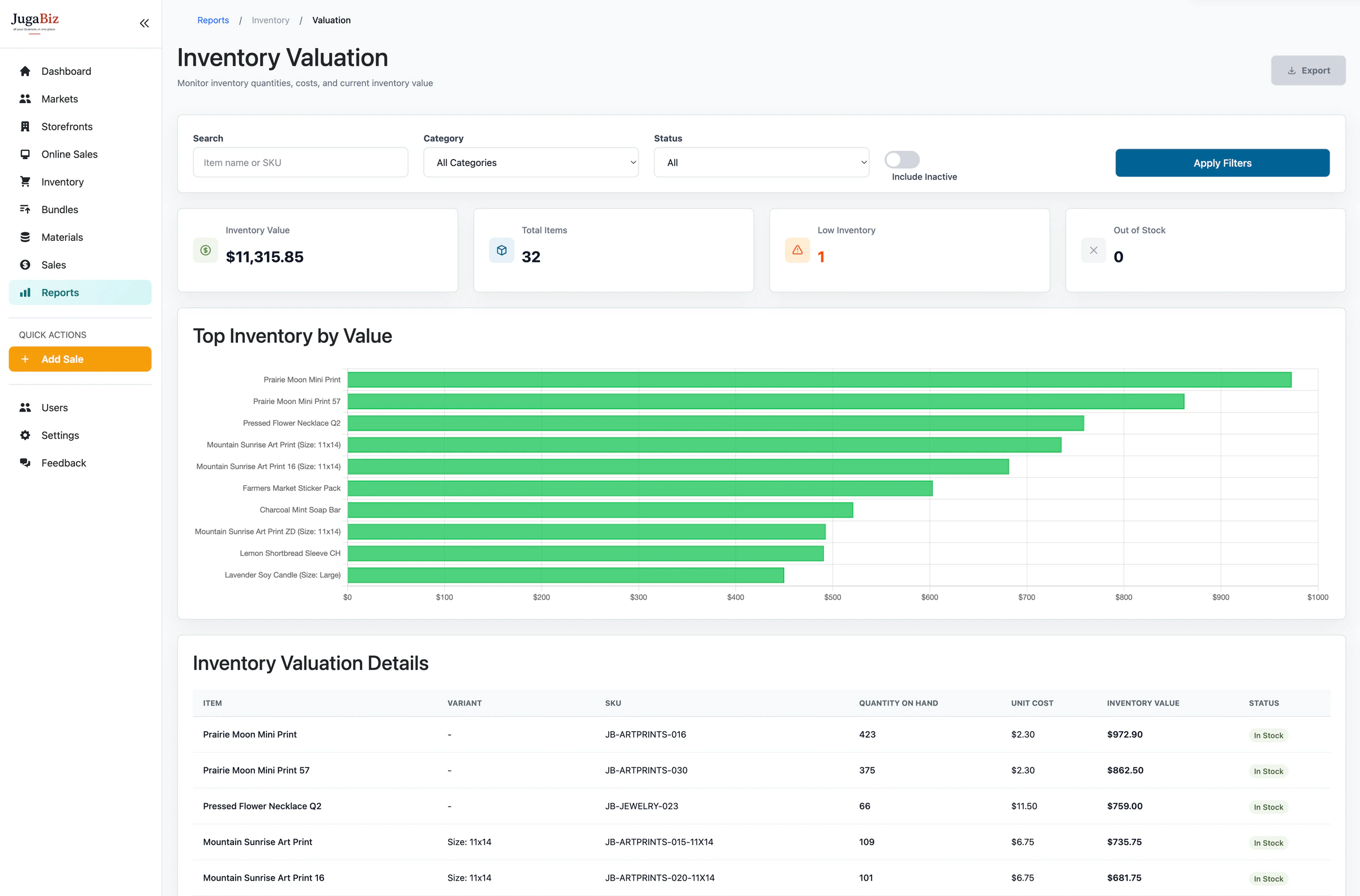
JugaBiz began as a focused application for tracking sales at markets. As the real workflow exposed adjacent problems, it grew into a broader platform connecting sales, inventory, costs, profitability, locations, reporting, and day-to-day business operations.
01 / The starting point
It started with market sales.
The first version of JugaBiz was built around a narrow problem: tracking what was being sold at markets and making that information useful after the day was over.
That focused starting point mattered. Instead of designing a large system around hypothetical requirements, the application could grow from real usage and real operational needs.
Start with the problem you actually have. Build outward when the next problem becomes clear.
02 / The system grew
One problem led to the next.
01
Market sales
02
Sales data
03
Inventory
04
Costs + COGS
05
Profitability
06
Locations
07
Reporting + analytics
Once sales are being tracked, other questions naturally appear. What inventory moved? What did those products cost? What remains at each location? Which products are actually profitable? What does the business need to know next?
JugaBiz expanded around those relationships instead of becoming a collection of disconnected tools.
03 / Operational scope
The pieces are more useful when they share the same system.
Sales
- sales tracking
- sales data
Inventory
- inventory management
- multi-location inventory
Product costs
- cost of goods
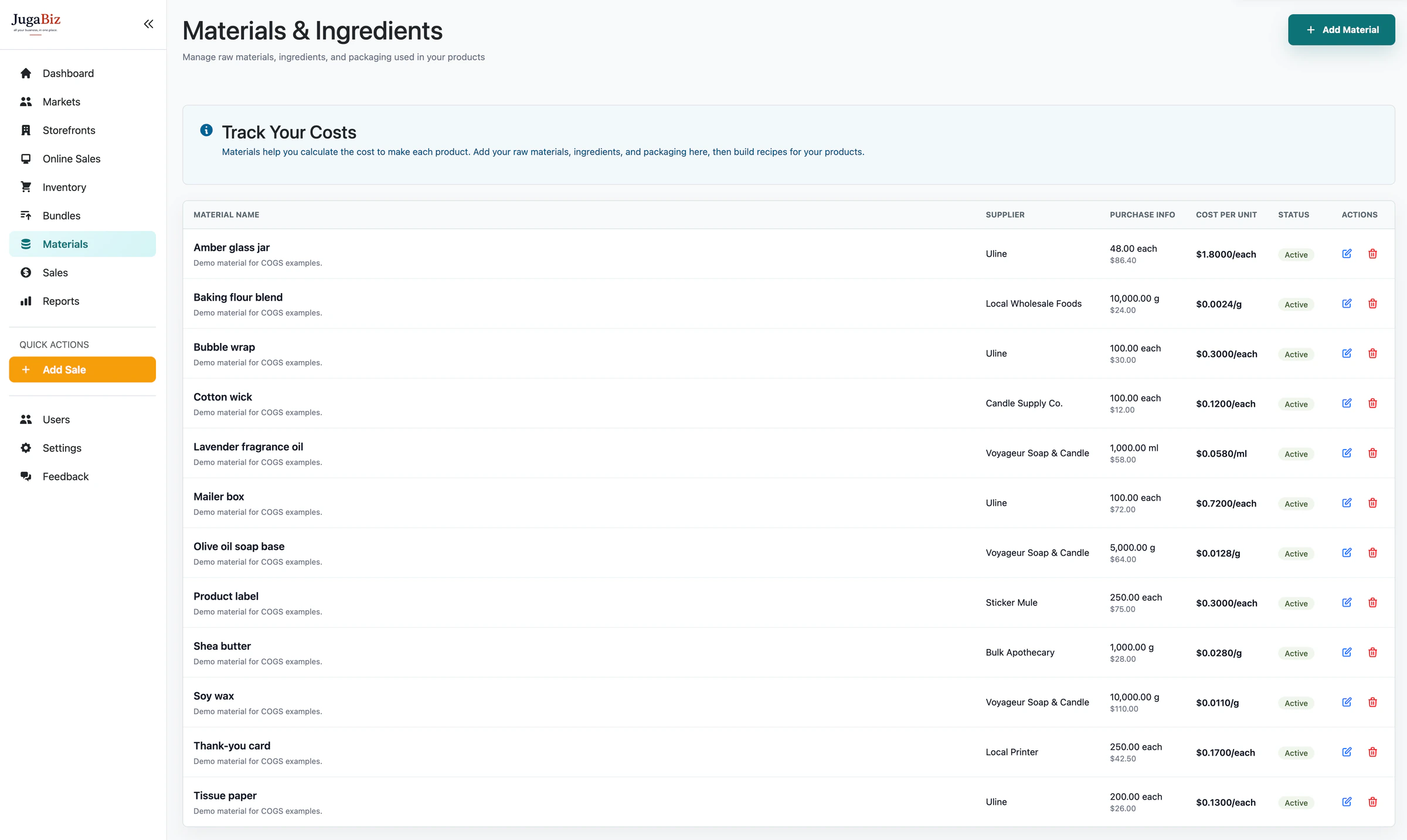
- recipes / bill of materials
Business insight
- profitability
- reporting
- analytics
Sales, inventory, costs, and reporting are closely related business problems. Keeping them in the same application allows the system to understand those relationships instead of forcing the business to reconcile disconnected tools.
04 / Product thinking
The workflow shapes the software.
JugaBiz is an example of why custom software starts with understanding how the business actually operates.
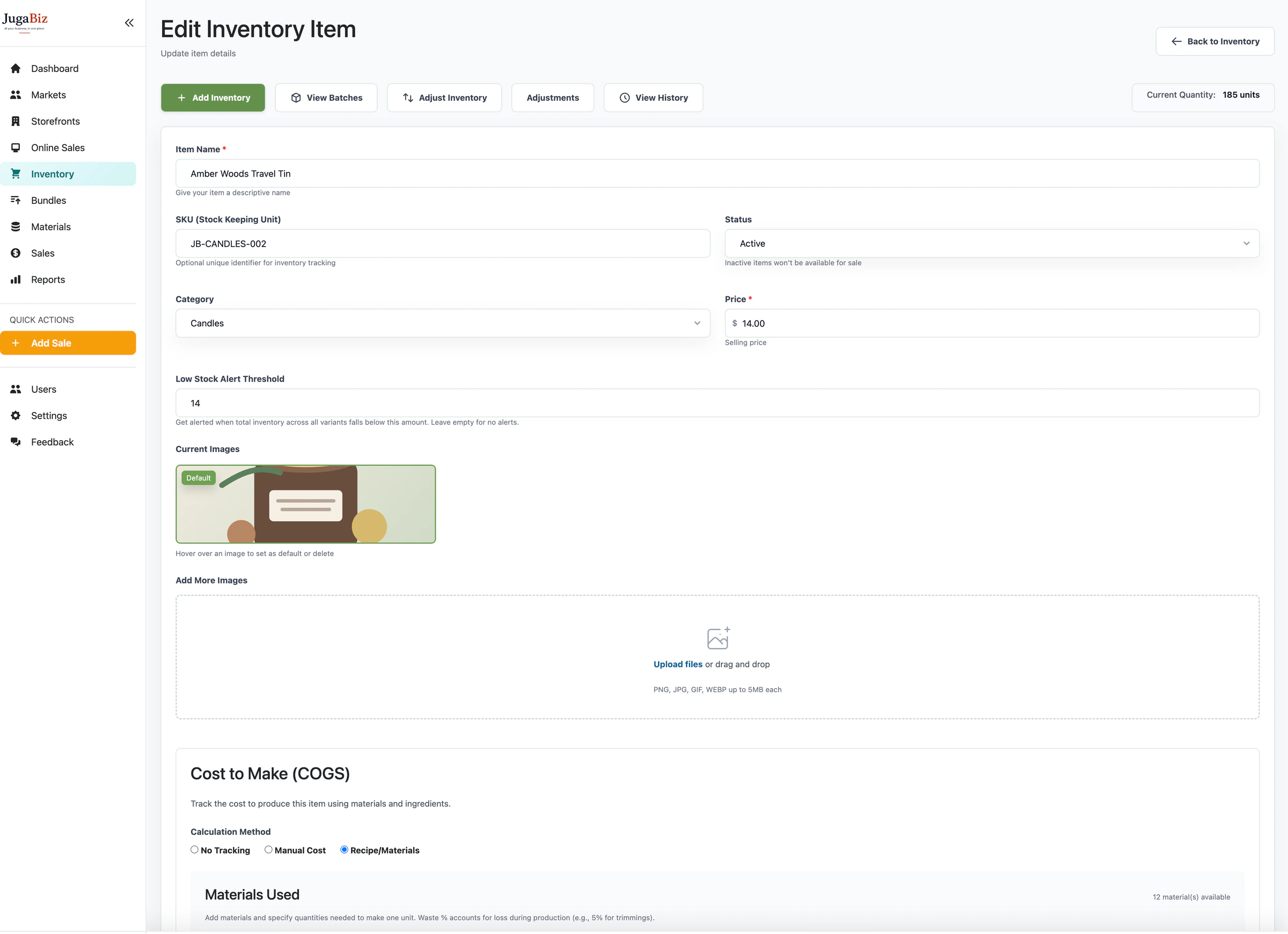
Features are useful only when the underlying relationships make sense. Sales affect inventory. Inventory has cost. Products can depend on recipes or bills of materials. Locations change what is available where. Reporting depends on all of it being modeled coherently.
The interface comes after those relationships are understood.
The application should model the business—not force the business to model the application.
05 / Architecture
From one business to a platform for many.
A tool built for one business and a SaaS platform built for many businesses have different architectural requirements.
As JugaBiz evolved, the application architecture expanded toward a multi-tenant model capable of supporting separate businesses while maintaining appropriate separation of their operational data.
Business A
Separate operational data
Business B
Separate operational data
Business C
Separate operational data
Conceptual architecture view, not an infrastructure diagram.
06 / Engineering
Built to keep changing as the business changes.
Business software changes because the business changes. New workflows appear. Existing workflows become clearer. Reporting needs evolve. Integrations become useful. What started as a small application can become operational infrastructure.
That makes maintainability part of the product—not cleanup work for later.
For systems like this, maintainable architecture, incremental development, clear data relationships, extensibility, and avoiding unnecessary complexity matter because the software has to keep changing.
07 / Platform
What JugaBiz has grown to support.
Custom web application
SaaS
Multi-tenant
Sales
Inventory
Multi-location inventory
COGS
Recipes / bill of materials
Profitability
Reporting
Analytics
08 / The takeaway
Good custom software earns its complexity.
JugaBiz did not become a larger application because more features sounded better. It grew because solving one operational problem revealed related problems worth solving.
That is where custom development makes sense: when the workflow, relationships, and requirements are specific enough that forcing the business into disconnected generic tools becomes the more complicated option.
Related work
More project records.
Have a workflow that doesn't fit?
Tell us how the business actually works.
Show us the workflows, workarounds, disconnected systems, or limitations you're dealing with. We'll help determine whether custom software makes sense—and what it should actually solve.